 |
 |
| Common questions about Lessons in Lutherie |
~ How do we decide what to work on?
We talk on the phone, and after you arrive, about your interests, level of experience,
and tools and machines that you have, or plan to get. My own inclination is to teach
you guitar making technique through hands-on work with the tools and materials you
have and will be using. I want you to go home with skills that are useful to you in your
own shop. If we concentrate on learning technique, we won't produce as many guitar
parts, but you take away more skills and knowledge.
Some students are primarily interested in getting a guitar built, so sometimes we divide
up the tasks, and I will make a few of the parts. In any case, I want you to be happy
with your experience here, and since it's your class exclusively, we can adjust what
we're doing to suit you.
~ How long would it take me to build a guitar working with you?
I have a friend who is a division manager for the company that probably made the
chips in the computer that you are using right now. He told me that when one of his
people comes to him with a time estimate for how long a project will take, he
multiplies their number by pi. "At 3.14 times the estimate I'm usually high, but I'm
always closer than their original estimate."
So to give a little more direct answer, how far you get depends on how much skill and
experience you bring to the project. But very roughly, I would estimate that working
together we could get you to the "ready to finish" stage in two to three weeks,
provided that you use some pre-formed parts like rosette and bridge. The process
could be spread over as long a period as you like, of course. Some people come from
far away for an extended stay, and some come for a day or a weekend, or
occasionally, just for a morning or an afternoon.
~ How much might a guitar that I make be worth?
If you work carefully, make an instrument that looks nice, plays easily, and has a
reasonably good tone, it should be worth between $2,000 and $3,000. One of the
most important things to do to insure quality of tone is to go through the wood testing
and voicing procedures that I use.
~ What about building a steel string guitar?
There is a lot of overlap of methods between classical and steel string guitar
construction. The basic woodworking techniques are the same, and if this is going to
be your first instrument, I can help you a lot with doing the fundamentals well. Guitar
making of any type is a high level of woodworking craft, and there is much to be
learned about fine tuning of tools, and working to close tolerances.
~ What is a typical "day"?
I'm an early riser, so we begin at 8:00 AM, and go until 12:00 with a coffee break at
10:00. Not to worry--we've got great coffee--regular, or home roasted espresso! Decaf
and a selection of teas are also available. Special requests accommodated.
At 12:00 we break for lunch which takes us to 1:00 PM. From then we go until 5:00,
with an afternoon coffee break at 3:00. This amounts to a seven hour work-day, for
which I give a discount, and charge for six. This lets me take an occasional phone call
without feeling like I'm shorting you.
Students often want to work in the shop on their own in the evenings, and that's fine
with me, provided there is no use of power tools. Neck carving is often done in the
evening.
~ What about accommodations?
Since the Mendocino coast is a tourist destination, everything from campsites to fancy
bed-and-breakfast inns are available nearby. We have an apartment at our house that
we rent to students for $40 per night. It has it's own separate entrance, fully equipped
kitchen and bath, and accommodation for two. The shop, being on the property, is a
two minute walk away.
We talk on the phone, and after you arrive, about your interests, level of experience,
and tools and machines that you have, or plan to get. My own inclination is to teach
you guitar making technique through hands-on work with the tools and materials you
have and will be using. I want you to go home with skills that are useful to you in your
own shop. If we concentrate on learning technique, we won't produce as many guitar
parts, but you take away more skills and knowledge.
Some students are primarily interested in getting a guitar built, so sometimes we divide
up the tasks, and I will make a few of the parts. In any case, I want you to be happy
with your experience here, and since it's your class exclusively, we can adjust what
we're doing to suit you.
~ How long would it take me to build a guitar working with you?
I have a friend who is a division manager for the company that probably made the
chips in the computer that you are using right now. He told me that when one of his
people comes to him with a time estimate for how long a project will take, he
multiplies their number by pi. "At 3.14 times the estimate I'm usually high, but I'm
always closer than their original estimate."
So to give a little more direct answer, how far you get depends on how much skill and
experience you bring to the project. But very roughly, I would estimate that working
together we could get you to the "ready to finish" stage in two to three weeks,
provided that you use some pre-formed parts like rosette and bridge. The process
could be spread over as long a period as you like, of course. Some people come from
far away for an extended stay, and some come for a day or a weekend, or
occasionally, just for a morning or an afternoon.
~ How much might a guitar that I make be worth?
If you work carefully, make an instrument that looks nice, plays easily, and has a
reasonably good tone, it should be worth between $2,000 and $3,000. One of the
most important things to do to insure quality of tone is to go through the wood testing
and voicing procedures that I use.
~ What about building a steel string guitar?
There is a lot of overlap of methods between classical and steel string guitar
construction. The basic woodworking techniques are the same, and if this is going to
be your first instrument, I can help you a lot with doing the fundamentals well. Guitar
making of any type is a high level of woodworking craft, and there is much to be
learned about fine tuning of tools, and working to close tolerances.
~ What is a typical "day"?
I'm an early riser, so we begin at 8:00 AM, and go until 12:00 with a coffee break at
10:00. Not to worry--we've got great coffee--regular, or home roasted espresso! Decaf
and a selection of teas are also available. Special requests accommodated.
At 12:00 we break for lunch which takes us to 1:00 PM. From then we go until 5:00,
with an afternoon coffee break at 3:00. This amounts to a seven hour work-day, for
which I give a discount, and charge for six. This lets me take an occasional phone call
without feeling like I'm shorting you.
Students often want to work in the shop on their own in the evenings, and that's fine
with me, provided there is no use of power tools. Neck carving is often done in the
evening.
~ What about accommodations?
Since the Mendocino coast is a tourist destination, everything from campsites to fancy
bed-and-breakfast inns are available nearby. We have an apartment at our house that
we rent to students for $40 per night. It has it's own separate entrance, fully equipped
kitchen and bath, and accommodation for two. The shop, being on the property, is a
two minute walk away.
~ What about materials?
I have some materials for sale to students, like bridges and neck wood, but I usually
recommend that you buy your materials from suppliers like Allen Lutherie Supply,
Allied Lutherie, and Luthiers Mercantile (see Favorite Links). These suppliers offer
a 10% discount to students enrolled in a lutherie school, and I qualify as one. The
discounted materials need to be shipped to me.
~ What tools do I need to bring?
While you're here you can use any of my tools, jigs, fixtures, and machines, so you
don't have to bring anything in particular. But it's a good idea to bring tools that need
sharpening or tuning, particularly a block plane, chisels and scrapers, if you have
them. A shop apron is nice, and I use a 3 power Optivisor a lot, for close work.
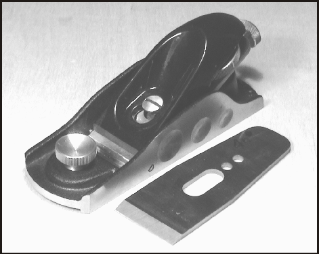
My favorite plane is the Veritas standard block plane, catalog #05P22.30, from Lee
Valley. At $110 it's a real bargain. It's the only plane I use for guitar making, and I
use it a lot. While you're at it, get a spare blade for sharpening to a high angle, for
planing figured woods.
I have some materials for sale to students, like bridges and neck wood, but I usually
recommend that you buy your materials from suppliers like Allen Lutherie Supply,
Allied Lutherie, and Luthiers Mercantile (see Favorite Links). These suppliers offer
a 10% discount to students enrolled in a lutherie school, and I qualify as one. The
discounted materials need to be shipped to me.
~ What tools do I need to bring?
While you're here you can use any of my tools, jigs, fixtures, and machines, so you
don't have to bring anything in particular. But it's a good idea to bring tools that need
sharpening or tuning, particularly a block plane, chisels and scrapers, if you have
them. A shop apron is nice, and I use a 3 power Optivisor a lot, for close work.
My favorite plane is the Veritas standard block plane, catalog #05P22.30, from Lee
Valley. At $110 it's a real bargain. It's the only plane I use for guitar making, and I
use it a lot. While you're at it, get a spare blade for sharpening to a high angle, for
planing figured woods.
commonquestionshirez.html
____________________________________